
Blog
WordPress vs. Shopify vs. Custom Code – Which Website Platform is Right for Your Business?

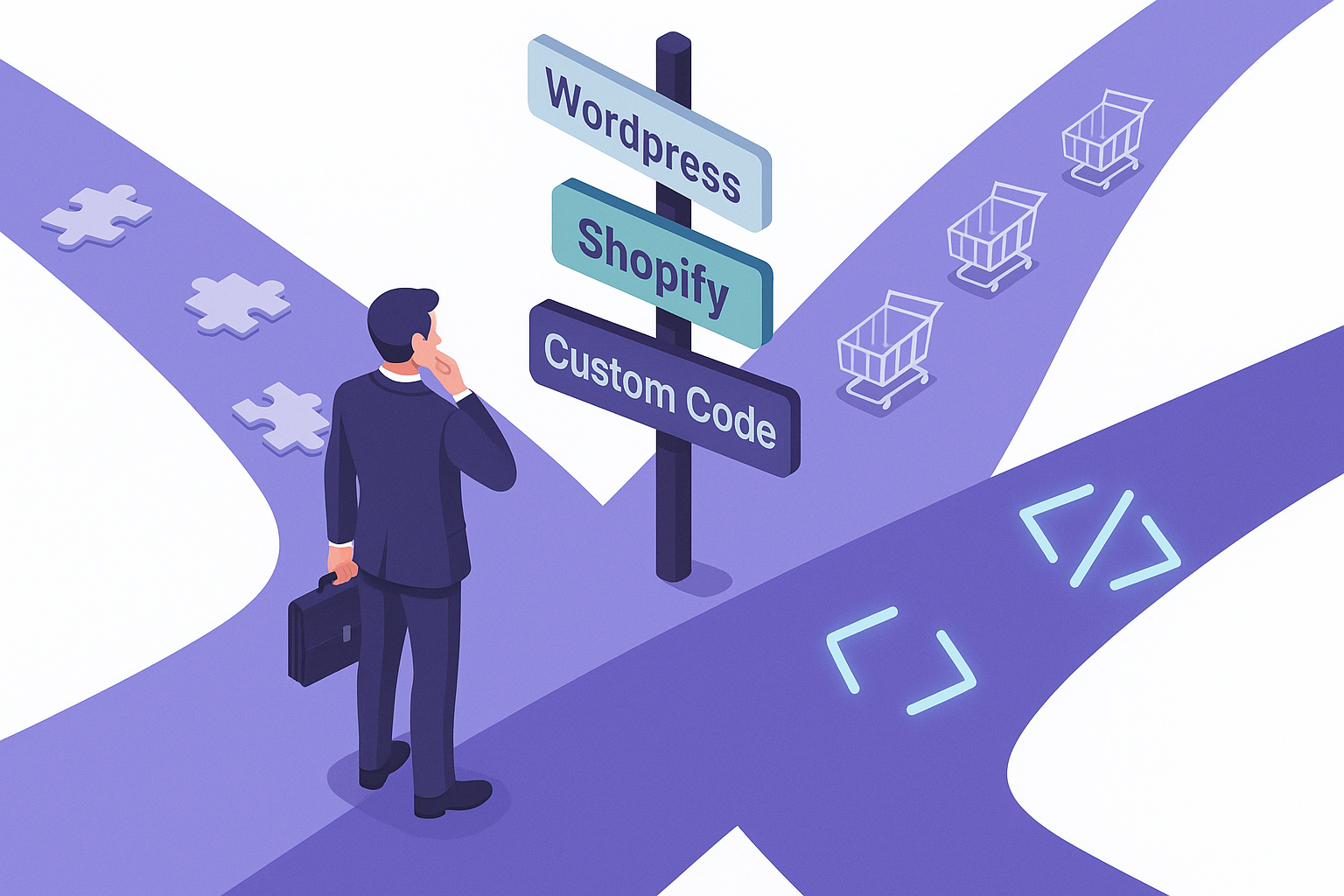
Your website is more than just an online address—it’s your digital storefront, salesperson, and brand ambassador. The right platform can determine how easily your business grows, ranks on Google, and converts visitors into loyal customers. In 2025, businesses face three dominant choices: WordPress, Shopify, and Custom-Coded Websites. Each comes with strengths, weaknesses, costs, and ideal use cases.
This guide explores each platform in depth, provides comparisons, case studies, and a decision-making framework to help you answer one of the most important digital questions: Which website platform is right for my business?
WordPress – The Flexible All-Rounder
What is WordPress?
WordPress is the world’s most popular content management system (CMS), powering more than 40% of websites globally. Originally built for bloggers, it has evolved into a flexible platform suitable for blogs, business websites, e-commerce (via WooCommerce), and enterprise-level projects.
- Open-source software
- Thousands of free and paid themes
- 50,000+ plugins for added functionality
- SEO-friendly architecture
- Flexibility: Suitable for blogs, e-commerce, or corporate sites.
- Cost-effective: Hosting + domain + themes often cheaper than SaaS platforms.
- SEO-friendly: Built-in tools plus plugins like Yoast or RankMath.
- Scalable: From a 5-page brochure site to a 5,000-product store.
- Community support: Huge global developer network.
- Maintenance required: Frequent plugin and security updates.
- Performance issues: Can be slow without optimization.
- Security risks: Needs additional plugins for firewall, backups, and malware protection.
- Learning curve: Some technical knowledge required.
Shopify – The E-commerce Specialist
What is Shopify?
Shopify is a hosted e-commerce platform designed for businesses that want to sell products online without worrying about hosting or security. Everything—hosting, payment gateways, SSL—is built in.
- Drag-and-drop website builder
- Integrated payments
- 24/7 support
- App marketplace for extra features
- Ease of use: Setup and sell in hours.
- Secure payments: PCI-compliant checkout.
- Mobile optimization: Responsive themes.
- Support: Reliable customer service.
- Recurring fees: Monthly subscriptions + add-ons can be costly.
- Limited customization: Less flexible than WordPress or custom websites.
- Transaction fees: Unless using Shopify Payments.
- SEO limitations: Compared to WordPress.
Custom-Coded Websites – Full Control
What Are Custom Websites?
Custom-coded websites are built from scratch using languages like HTML, CSS, JavaScript, PHP, or frameworks like React, Angular, or Laravel. Businesses often add a tailored admin panel for content management.
- Unlimited customization
- Advanced integrations (ERP, CRM, AI)
- High security and performance
- Complete control: Tailor every function.
- High performance: Optimized for speed.
- Secure: No third-party plugin vulnerabilities.
- Unique UX/UI: Stand out with bespoke design.
- Custom admin panels: User-friendly for business teams.
- High cost: Requires professional developers.
- Longer development: Weeks to months.
- Ongoing support: You’ll need developer assistance.
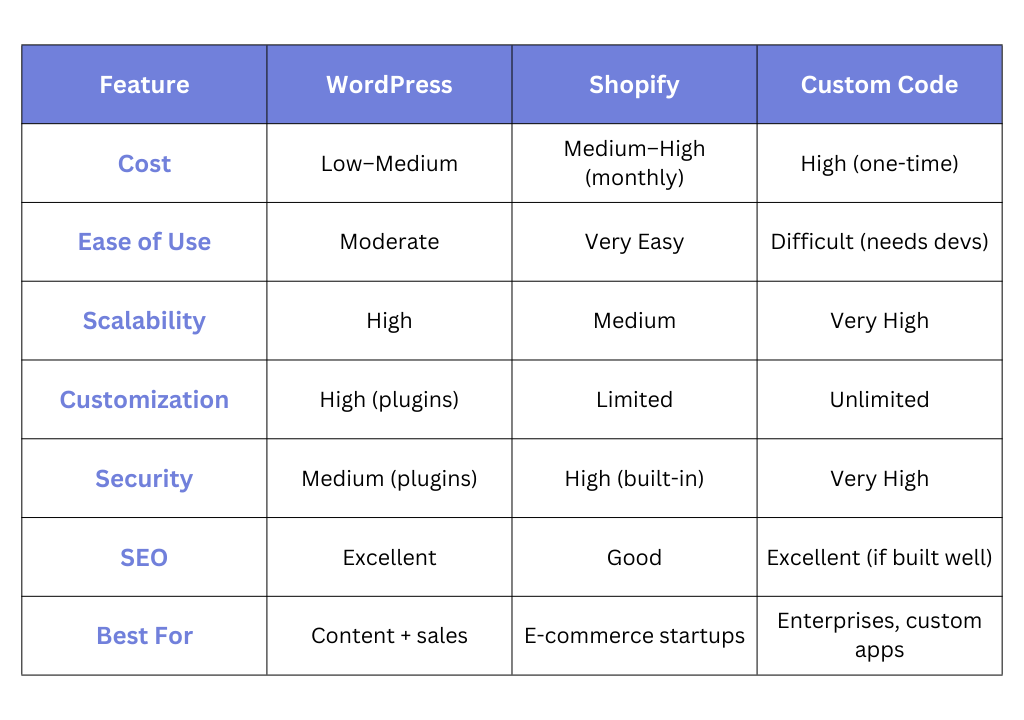
Side-by-Side Comparison
Use Case/Case Study
Startup
Limited budget + wants to sell products fast → Shopify
Small Business with Blog + E-commerce
Needs blog + product pages optimized for Google → WordPress (WooCommerce)
Enterprise
Requires advanced workflows, dashboards, or multi-language portals → Custom-Coded Site
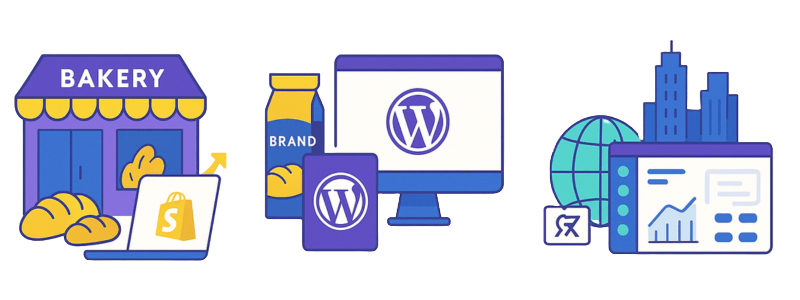
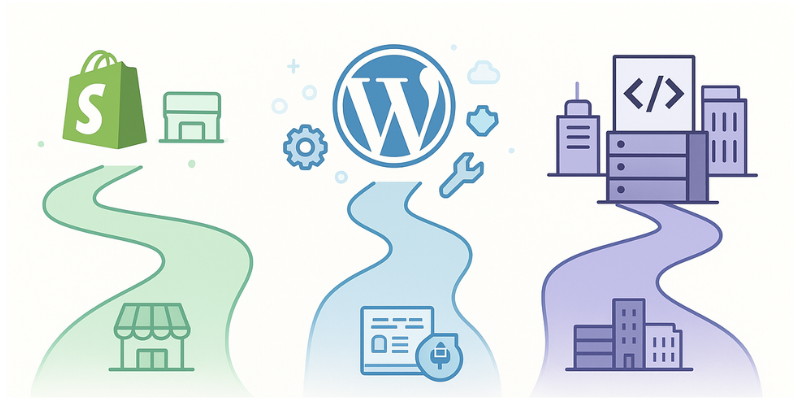
Bakery to Enterprise
Phase 1: Local bakery starts on Shopify for instant sales.
Phase 2: Grows brand → migrates to WordPress for SEO + content marketing.
Phase 3: Expands globally → invests in a custom-coded solution with multilingual features and custom admin.
Best Practices for Choosing the Right Platform
Define your primary goal (sales, content, branding).
Set a budget (monthly vs. one-time investment).
Consider your timeline (fast launch vs. long-term build).
Evaluate your growth plans (local vs. global).
Factor in maintenance & scalability.
Future Outlook (2025 and Beyond)
WordPress: Still dominant for SEO and hybrid sites.
Shopify: Adding AI-powered selling tools.
Custom Websites: Becoming popular for enterprises with AI integrations and advanced automation.
Conclusion
Choosing between WordPress, Shopify, and Custom Code depends on your business stage, goals, and resources.
Start small? → Shopify.
Balance content + commerce? → WordPress.
Need full control and enterprise-grade scalability? → Custom Code.
The right choice will set your business up for success in the digital era.
Still unsure which platform is best?
At SKC WebStudio, we help businesses of all sizes build powerful websites designed to grow.
 Website Development
 App Development
 Digital Marketing
 Branding & Creative Design
 Tech & Growth Solutions